

 I am the fucking greatest! Ah, the wave of pride and misguided sense of accomplishment that one can ride having “finished” a script. Especially script number one. The real one, not the others before it, shat out only to be abandoned too late out of sentiment and denial. Don’t get me wrong; completing a script is hard work. The act itself is something to be proud of. What happened after I typed those last words wasn’t what I expected. A colossus weight lifted. For a day I felt serene. Then that wave of anarchic emotion that I’d expected kicked in and I felt complete…but was the script?
Tag: Guest Post
 A few weeks ago HBO and then CBS announced that they would launch stand-alone online services in U.S. in 2015. Before that, Netflix had made known that it would start producing features, crushing theatrical release windows once and for all, after it had contributed to the change of the patterns of attention and the way TV series are made by releasing its House of Cards episodes all at once, as a 13-hour movie. ‘Now the real shakeout begins’, wrote Ted Hope in Hollywood Reporter. ‘We are witnessing the march from once lucrative legacy practices built around titles to a new focus on community.’ Michael Wolff, writing also in the Hollywood Reporter, disagrees: ‘Streaming services from the two networks don’t signal television’s capitulation to Netflix and the web; it’s actually the opposite, as the medium expands yet again to gobble up more revenue.’ And in that sense, he says, it will hurt Netflix and all other digital competitors.
 Recap: This series chronicles my wide-eyed and crushingly insecure processes that pulled back the curtain on my ideas about filmmaking – revealing what it really takes to write and direct my movie, Recess. Occasionally I gain productive insights that plant me on less insecure ground. Others I still talk to my therapist about. Perhaps the most important insight I’ve kept – from teething as a writer – the idea that creating detailed, well-drawn characters with original voices can make even a script about a haunted doorknob compelling. I realize there may be infinite approaches more resolute but, for me, the haunted doorknob concept puts character development into perspective.
Television’s impressive artistic and commercial success is not a solely American phenomenon – it is not even an English language phenomenon. The case of the Danish series Borgen (2010-2013) is exemplary. Borgen brought together on average a 50% share in its home market and was shown all over the world to great acclaim. Much like The West Wing, it worked as a reminder that sincere idealism can still be part of politics, while at the same time giving a pretty nuanced idea of how politics work. Danish TV drama (shows like The Killing/Forbrydelsen of 2007-2012, The Bridge/Bron from 2010-2013, and most recently The Legacy/Arvingerne and soon-to-be-released 1864) began its revival about fifteen years ago – at the same time as its domestic film industry, and with the fiction department of the public channel DR as its driving force.
Categories
Filmmakers: You Are Being Lied To
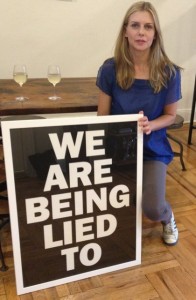 Filmmakers, you’ve been lied to. Film school has taught you to pitch the WHAT about your project — WHAT is the story, WHAT is the cast, WHAT are the target group for the film etc — but the WHAT is not the most important element when it comes to crowdfunding. The WHY is! You see it comes down to your likability on camera. ‘But I’m cool and I’m a great filmmaker’ I hear you say. While that’s good for you, that’s not why people want to engage with your crowdfunding campaign.
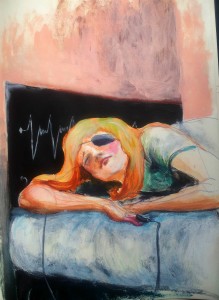 Currently, I’m crowdfunding on Kickstarter for The Quantified Self, an experimental story about a family that records and analyzes everything about themselves. It’s my third science-fiction film mainly because where I grew up science fiction represented hope for something better. Just twenty years ago I was a humble physics student at Kharkov State Polytechnic University in the former Soviet Union. When I came to the US I had to start from scratch like every immigrant. My first job was $4.75 an hour working at a hardware store on Coney Island. It took me 15 years to get a stable job in IT on Wall Street. It also took me 15 years to realize that I was moving away from myself. I felt depressed and confused. Having a job I didn’t like eroded me from inside and made me rather passive and ignorant about the world around me. Something was missing.
Crafting a brilliant script. That’s all it takes to get a project noticed and “green lit”. This was my single-minded approach when I got the bright idea to start skipping down the indie filmmaking road. It was all so clear; admittedly up hill but I saw no potholes or wreckage to avoid. Nope. Curious sights and comfortable, clean rest areas amply stocked with fresh toilet paper lined my highway. The horizon seemed practically at arms length. My first detour: I had as much interest in writing a screenplay as Hunter S. Thompson probably did with the idea of writing sober.
