My post on “Is There A “Too Many” When It Comes To Playing Film Festivals” generated some good questions and points in the comments. I hope to get to them all in the days and weeks ahead.
One thing that truly resonated for me though was Jon Jost’s dismissal of the box office performance of Ramin Bahrani’s, Lance Hammer’s, and Kelly Reichardt’s recent films. These artists, along with a few others, represent some of the great hope for American Art Film in the near future (and Jon probably raises them precisely for that reason).
It’s a mistake to take the theatrical results of their most recent films as the criteria for their financial success. No one can think about a single film anymore as the litmus test. When all filmmakers still dwelled in the world of acquisitions, that way of thinking was understandable; people felt you were only as successful as your last film. What your film sold for and how it performed was all that seemed to matter. In a world where it makes less and less sense to license your film for all media in exchange for a paltry sum (should you even be so fortunate to have such offers), new ways to evaluate success are emerging.
Bahrani and Reichardt licensed each of their last films to quality art-house distributors. Hammer took another approach. Yet, Bahrani and Reichardt built on their audience from the prior film, as you can be assured that Hammer will too. These are what the music business would see as catalogue artists. Their fan base will grow with each new release. The more they are able to maintain an ongoing dialogue with their audience, the richer a dialogue they can offer, the more that audience will support them. It is not about the one-off film anymore — nor that film’s results. It is all about the community of support that artists can develop for their work. That community will only flourish to the degree that there is both dialogue within the community, and well-maintained flow of content.
Artists who maintain a rich dialogue with their community will benefit in many ways from what they have built. Some of it will be directly financial, both in terms of amount of that reward but also predictability thereof. Other ways will include increased access to audience (which has a wide and varied group of benefits), decreased marketing & distribution costs, and new streams of revenue.
The more filmmakers can think of how to maintain and deepen the on-going dialogue with their supporters the better off they will be.
P.S. I disagree strongly with Jon’s comment that the aforementioned films and filmmakers don’t do anything “aesthetically daring or difficult” — but this isn’t where I chose to look at such issues. But since it was raised, dare I say that whereas no one is reinventing cinema, that compared to the norms, each one went out a limb without a net — and they flew pretty damn high when they jumped. And man that ain’t easy — and it is extremely brave is this world of ours.



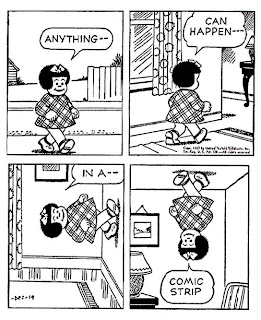 Our friend Bill Horberg sniffed these out for us. Nancy may be old school, but the idea of breaking with the rules of reality will forever feel new to us. They call it “the fourth wall” and here the artist shatters it. Whatever he’s doing, he’s making us laugh!